- Velvet & Steel
- Posts
- Why is your Buddy wearing his Dad's worn out Carhartt Jacket?
Why is your Buddy wearing his Dad's worn out Carhartt Jacket?
How this company has evolved over the years and why you should care

What is Carhartt?
Carhartt kicked off in 1889 when Hamilton Carhartt, a scrappy entrepreneur from Michigan, saw a gap in the market. Railroad workers—gritty, hardworking folks—needed gear that wouldn’t shred after a week. With just two sewing machines, five employees, and a half-horsepower motor in a Detroit loft, he started churning out bib overalls. His motto? “Honest value for an honest dollar.” He wasn’t wrong—those early overalls, made from tough duck canvas and denim, became the gold standard for durability. Hamilton didn’t guess what workers wanted; he asked them, tweaking designs based on real feedback. By 1910, the company had mills in South Carolina and Georgia, plus sewing spots in Atlanta, Detroit, Dallas, and San Francisco. It even hopped borders to Canada and England.
The world wars were a proving ground. During WWI, Carhartt offered up seven factories to stitch military uniforms. WWII saw them making coveralls for soldiers, jungle suits for Marines, and workwear for women hitting the factories back home. The Chore Coat, a legend since 1917, barely changed—proof they nailed it early. But the Great Depression nearly killed them. The 1929 crash slashed demand, and Carhartt teetered on the edge. Hamilton and his sons grit it out, though, and after his death in 1937, son Wylie took over. Wylie’s “Back to the Land” push opened rural Kentucky plants, betting on honest work to rebuild. It paid off—four of those facilities still run today.
Post-war, Carhartt kept evolving. The 1970s brought the Active Jac, a hooded jacket that’s still their top seller, and huge orders for the Alaska Pipeline showed their stuff could handle brutal cold. Then, in the ‘80s and ‘90s, something wild happened—Carhartt went from workwear to streetwear. Hip-hop artists like Tupac and Dr. Dre rocked it, and skaters loved the rugged vibe. Enter Carhartt Work In Progress (WIP) in 1989, a European spinoff that remixed classics for fashion crowds. Think Chore Coats with sharper cuts—same DNA, new audience. Meanwhile, the core brand stuck to its roots, adding tech like flame-resistant fabrics and waterproof coatings.
Now… Why is your buddy wearing his Dad’s old work jacket?
Post-pandemic, people—especially men—are craving realness. Fast fashion feels flimsy; Carhartt’s stuff lasts decades. In a world of remote work and digital overload, wearing something built for railroad grime or Alaskan pipelines feels grounding. Data backs this: resale platforms like Grailed report Carhartt pieces—vintage Chore Coats especially—jumping 30% in trade value since 2023. It’s not just nostalgia; it’s anti-disposability. Guys want gear that’s tough enough for a kettlebell session or a campsite, not just a Zoom call.
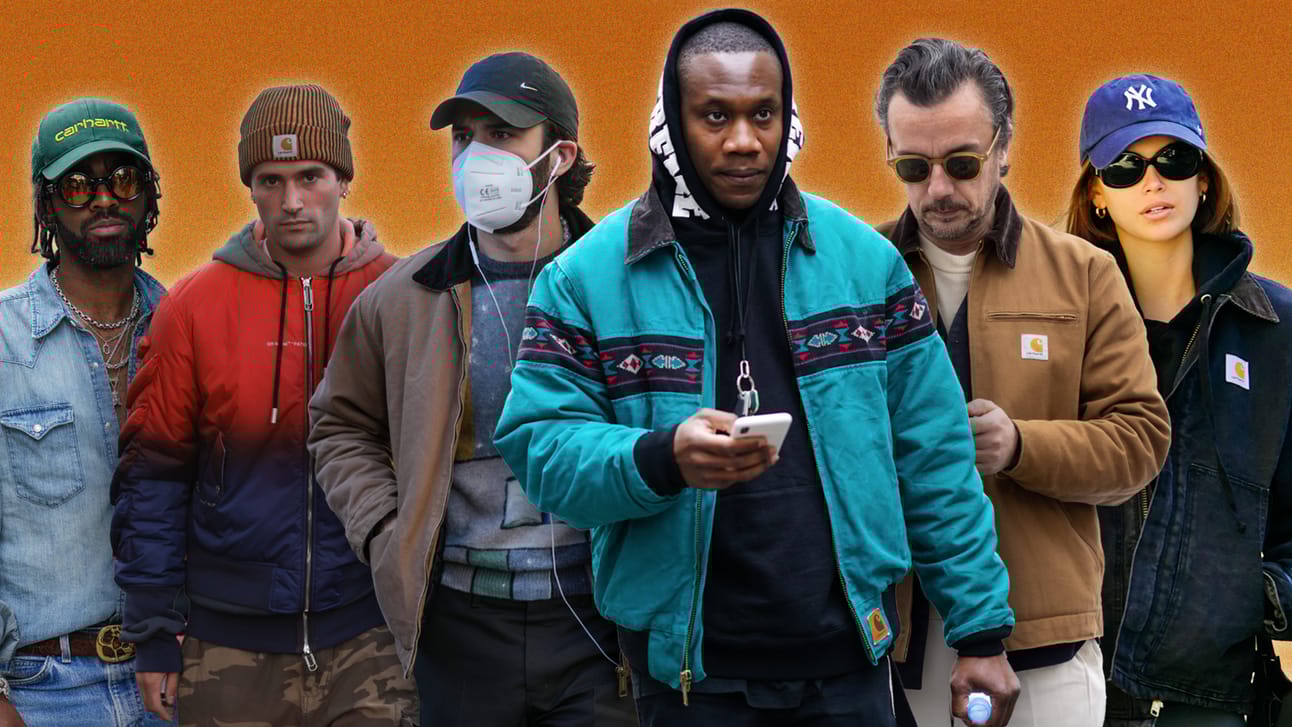
Image pulled from GQ
Carhartt isn’t looking to stop their legendary run anytime soon. We’re looking at products that are timeless and will forever be a staple in men’s clothing.
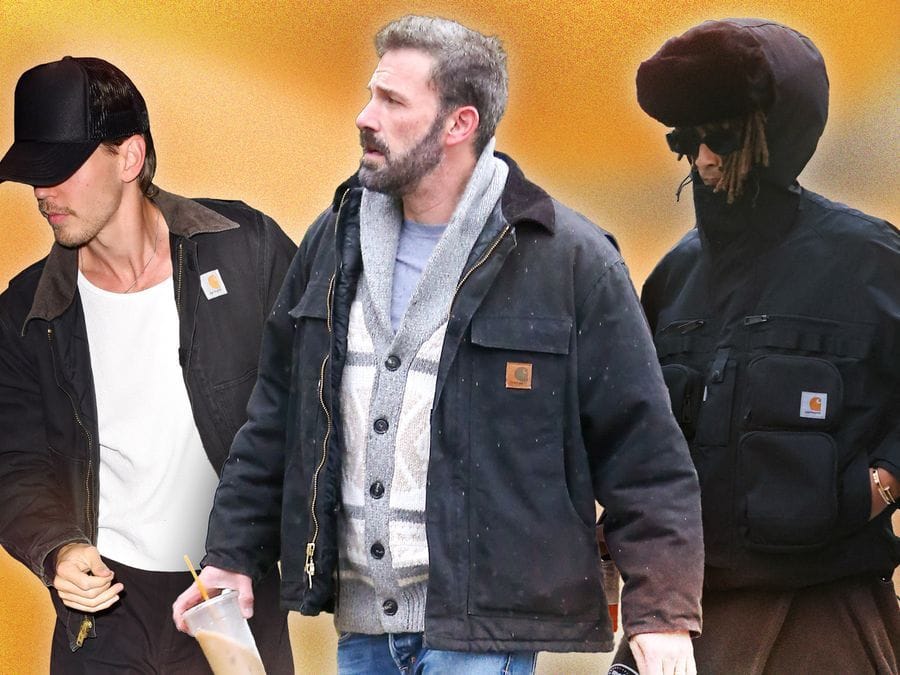
Image pulled from GQ
Here’s a couple of fun facts about Carhartt for you…
The Elvis Sighting: Elvis Presley rocked a Carhartt jacket in a 1950s photo shoot—before the streetwear craze. It was a plain Detroit Jacket, borrowed from a crew member on set. Fans didn’t clock it then, but vintage hounds now hunt those early designs, claiming “The King” made them cool first.
Beer Can Connection: During WWII, Carhartt’s factories churned out more than just uniforms—they made canvas bags for soldiers to carry supplies, including beer rations. Post-war, workers swore those bags kept brews colder longer than anything else. It’s why some old-timers still call a Carhartt pouch a “beer cooler.”
Once again, we thank you for reading today’s post.
Sincerely,
The Velvet and Steel Team